


The Last Bell


My first boxing book Dark Trade was published in 1996 and, in the years which followed, I was often asked if I would write a sequel. The answer was always a resounding "no". That book had been written at a distinctive period in my writing life. I was full of fervour for boxing and I was lucky to get to know fighters as distinctive as James Toney, Mike Tyson, Oscar de la Hoya, Roy Jones Jr, Michael Watson, Chris Eubank and Naseem Hamed.
As the title of Dark Trade implies, I did not turn away from the disturbing and occasionally tragic consequences of boxing. But, in many ways, it was also a romantic book. I was swept away by the courage and grit of the fighters I followed and did not really examine the business of boxing with lasting scrutiny. I was excited by boxing, and thrilled to spend so much time with the fighters themselves. I knew that Don King was a hustler, and something of a gangster, and that he and other promoters and managers exploited boxers. But I was far more interested in exalting the boxers rather than taking a long, hard look at the fight business.
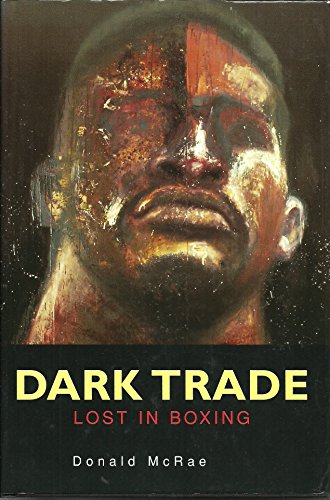
The longer you spend around that business, the grubbier it can make you feel. And so I resisted any lazy thoughts of churning out Dark Trade II and instead wrote books about heart surgeons and criminal lawyers, South Africa and different sporting stories. I am glad I diversified because, when I returned to writing books purely about boxing, I was ready to explore layered characters and events from the past.
A Man's World, about Emile Griffith being a gay world champion in the 1960s and '70s, and In Sunshine or in Shadow, about boxing in the Troubles, allowed me to revisit boxing from an historical and political perspective. I loved being able to stretch myself while researching such complex and fascinating terrain.
In 2018, as I neared the end of In Sunshine, I felt the first stirring. Rather than lingering in the past, I yearned to immerse myself in the here and now. I wanted the same old feeling of tracking a small group of contemporary fighters, of being with them before and after a testing battle, of hearing their doubts and fears in person. I missed the intimacy of interviewing current-day fighters in depth, of going to fights with them and talking with real immediacy.
I started to feel ready for a return to modern boxing when, in an early outline, written purely for myself, I scribbled down these words.
"Dark Trade allowed me to become a full-time writer. I owe that gift to boxing. But our relationship is not easy. Boxing often disappoints and upsets me. It is as crooked and destructive as it is magnificent and transformative. All these years later I am still trying to reconcile boxing's paradoxes of hope and despair, salvation and ruin."
I wanted to have one last crack at the conundrum, and see if I could make sense of it all. At the same time, my original South African family felt besieged. My mother, Jess, had been diagnosed for a second time with cancer while my sister, Heather, had been struggling for years with medical issues. My dad, Ian, had his own health problems. Much of this was natural as my parents, after sixty years of happy marriage, were in their late eighties. Death could not be held back much longer.
The shock, however, was that we lost Heather first. On Sunday 10 June 2018 my sister sat up in her bed in King's College Hospital in Camberwell, south London. I did not know it then but it would be the last time I saw her alive.
She had developed a rare condition six years earlier but Heather was upbeat, despite the acute problems. After we had spoken about the various procedures, and her belief that they might finally help her, she wanted to talk about life beyond illness.
'Okay Small,' I said, as Heather smiled at my old nickname for her.
I told my sister about the resurrection of Tyson Fury. The previous night Fury had stepped into the ring for the first time in two-and-half years. Having ballooned in weight to almost 400 pounds, amid consuming drinking and drug-taking, Fury had made his unexpected comeback in Manchester against a journeyman called Sefer Seferi.
Heather was so full of life and hope in hospital. We slipped back into our old routine and opened up. I usually avoided talking about boxing to her because it was such a harsh and alien world. But I mentioned that a future book might be set in contemporary boxing. Rather than a follow-up it would be a counterpart, in the 2020s, to Dark Trade.
Heather disliked boxing but she liked reading about the fighters I met and so I told her about Tyson Fury. I spared her the precise detail that, after 558 days outside the ring, I had watched him beat Seferi on a fourth round stoppage.
Heather and I then discussed flying together to visit our parents in South Africa. The altitude in Johannesburg affected her breathing but she was so bright that anything seemed possible as we remembered our childhood with our parents all those decades ago.
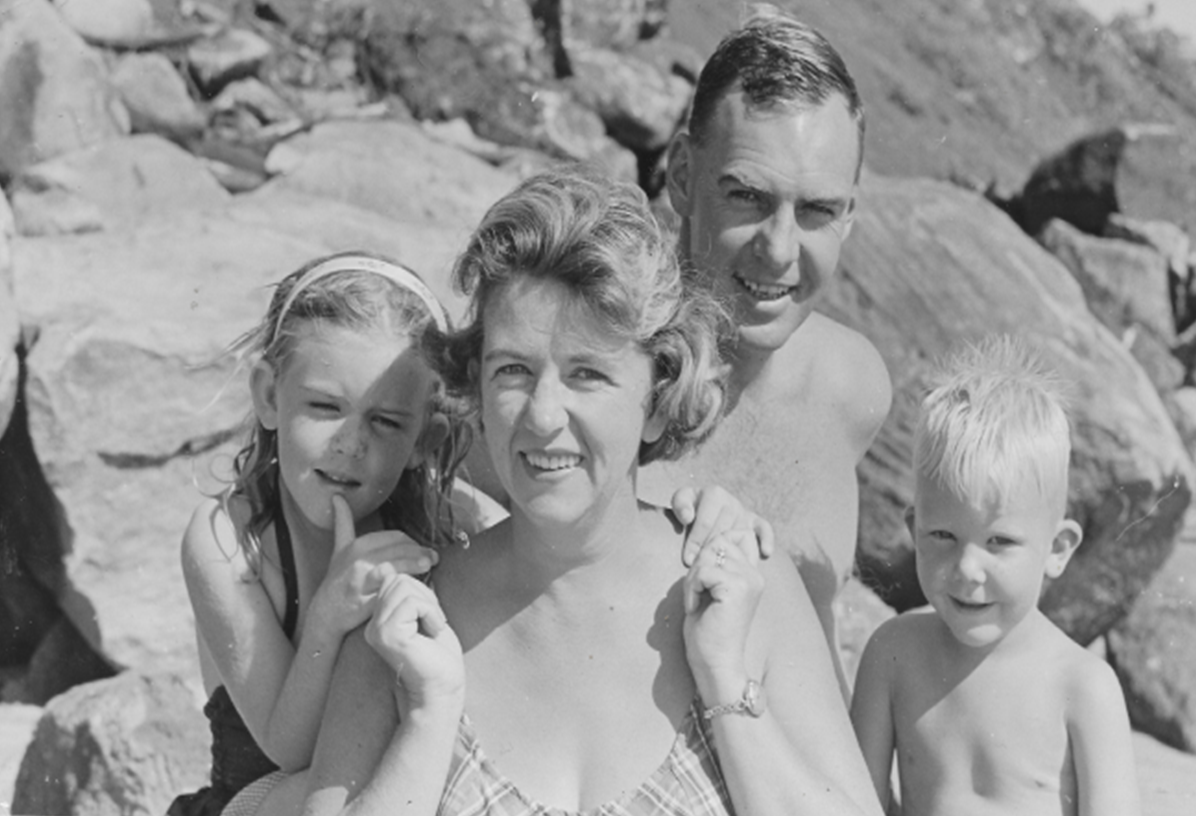
Our mother was in the early stages of yet another battle with breast cancer and our dad supported her decision not to undergo chemotherapy. The thought of losing her hung over us. Heather had not been as close to my parents as I was but, on a summer afternoon, I felt her love for them. Finally, I stood up to say goodbye.
'I'll see you soon, Heather,' I said as I kissed her cheek, and promised I would travel to see her at home in Wales in the coming months.
'I hope so,' she replied.
Heather died, shockingly, just three months later, on 15 September 2018.
Eleven weeks on, and the night before Fury fought Deontay Wilder in L.A., I watched his new documentary. "If I had 100 million in the bank or if I bought a Ferrari or a Bentley it didn't mean anything," Fury said. "Seven billion people in the world and I was the man who became world heavyweight champion. But I was depressed and I really wanted to die. I wanted a date with the death-man."
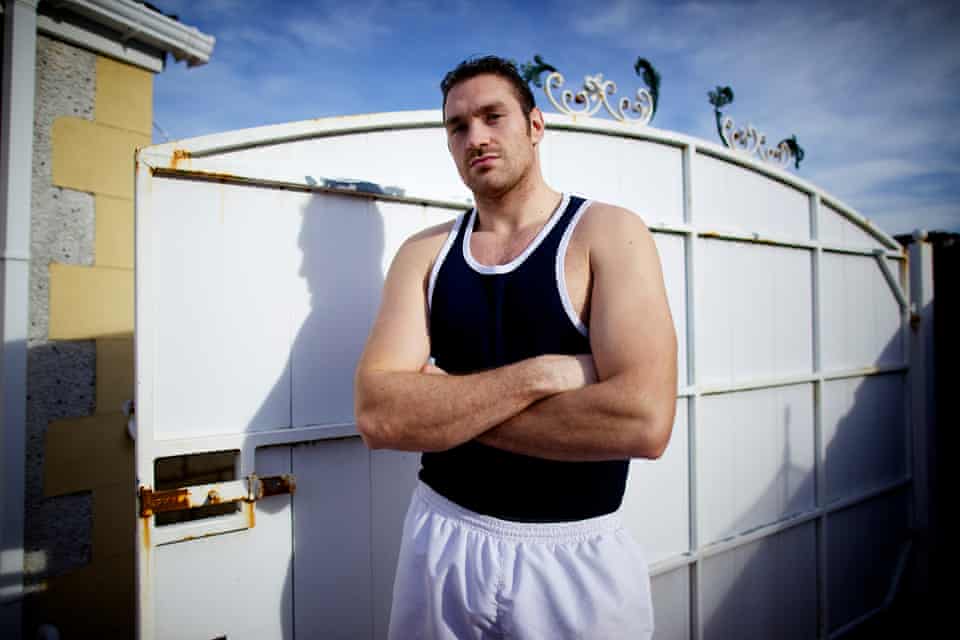
It echoed the first interview I had done with Fury in 2011, long before he was a famous world champion. Fury had told me then, as we sat with his wife Paris, and their two children, in their small bungalow in Morecambe: "There is a name for what I have where, one minute I'm happy, and the next minute I'm sad, like commit-suicide-sad. And for no reason - nothing's changed. One minute I'm over the moon and the next minute I feel like getting in my car and running it into a wall at a hundred miles an hour. I don't know what's wrong with me. I'm messed up."

Chris Thomond
Heather and Tyson could hardly have been more different. There were no analogies to be drawn between her death and his suicidal depression. But, as I watched his film, I felt the old emotions which I had explained to Heather. I was being pulled back to boxing. After so many days drained of colour, I started thinking about this new book again.
In the early hours of Sunday 2 December, I got up to watch Fury fight Wilder. I drifted into the living room, thinking of Heather and of my parents, with death not too far from them in their care home in South Africa.
Fury rose up on television. He was a huge man did who not mind being fleshy around his waist. Yet, somehow, he was able to move with surprising speed and lightness. But it was hard to know if he would be quick and agile enough to evade the shocking power of Wilder for twelve long rounds. Fury looked briefly pensive as his hands were wrapped in the locker room.
I said hello quietly and asked Fury how he was feeling. I dream up such nonsense because I am a writer rather than a fighter. I am bulky rather than chiselled. I am white-haired rather than tattooed. I am shy rather than boisterous. I am old rather than young.
For fifty years I have followed boxing, often obsessively. I've fallen for Ali, Mike Tyson and other great champions. Fury could join the pantheon if he withstood Wilder's ferocity and prevailed. I've given so much of my life to thinking and writing about the giants of boxing, and thousands of lesser fighters who will never scale their magnitude of achievement. I have been moved, amused, confused and enriched by these encounters.
Yet even zealots grow weary. In recent years my family and work, as well as books, movies and Arsenal, filled my head as much as boxing. There had been fleeting freedom from the ring.
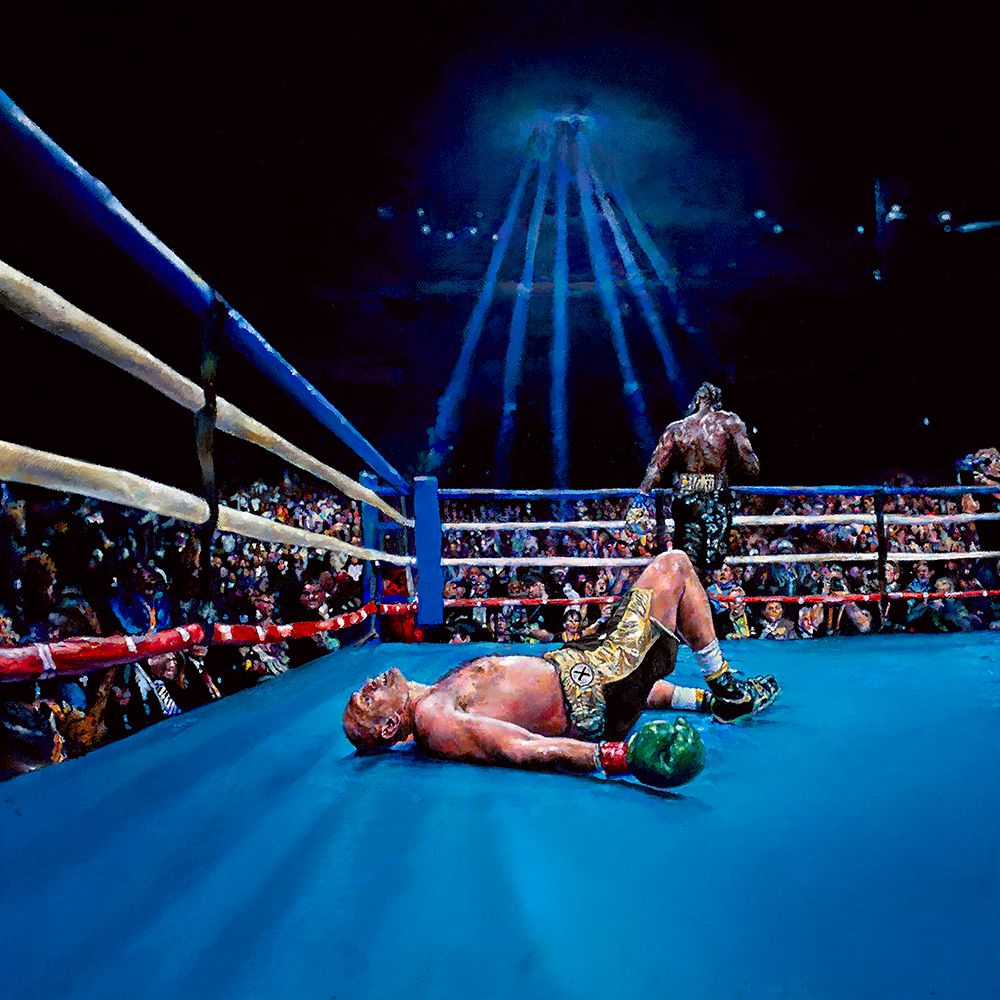
But I was transfixed as Fury and Wilder went to war with each other. Fury was dazzling for almost the entire fight. I thought he was way ahead when, after forty seconds of the last round a big left hand from Wilder made Fury step back. Sensing his chance, Wilder moved in quickly and detonated another right hand against Fury's chin. The big man went down when a huge left hook smashed against his head. I sank back into my seat as Fury collapsed in a heap, his head smacking against the canvas. He looked unconscious.
Wilder made a throat-slitting gesture as a woman at ringside covered her mouth in horror.
Amanda Kelley
Fury's arms lay limply at his side, his left leg stretched out while his right knee was bent. The referee had reached 'five' in his count over the prone figure.
As the ref yelled 'six', Fury started to move. He was on his side at 'seven'. At 'eight', he had one foot on the canvas as he started to use his hands to push himself up.
I stood up too, in disbelief at his resurrection.
Wilder stared at Fury in profound shock. His celebrations had been interrupted when, out of the corner of his eye, he saw the miraculous sight of Fury rising from the dead. Wilder looked as if he has been plunged back in a horror movie where, at the end, the monstrous killer removes an axe from his head and resumes his murderous carnage.
With a minute left Fury took charge again. He threw more punches before Wilder resorted to another exhausted clinch. A right hand from Fury jolted him and then, in a blur, the last bell rang. Fury wheeled away as he kissed the inside of his left glove. He then climbed the ropes in the corner and raised both hands.
After it was all over, with Fury unlucky to be denied his remarkable victory by a draw, I walked into our garden. It was 6:15 am and, in the wintry dawn, the dank air was full of birdsong. It was as if, after such a war in the ring, and so much loss in my family, a few surviving birds celebrated our survival. I paused, looked up and thought of Heather as I saw another kite, flying high and alone in a winter sky.
"I'm going to write this book, Small," I said silently to her in my head. "I've got to do it."
